
On the historical limitations of our social consciousness: Part 3. Social norms and values
How the economic foundations determine our social world.
3/21/20267 min read
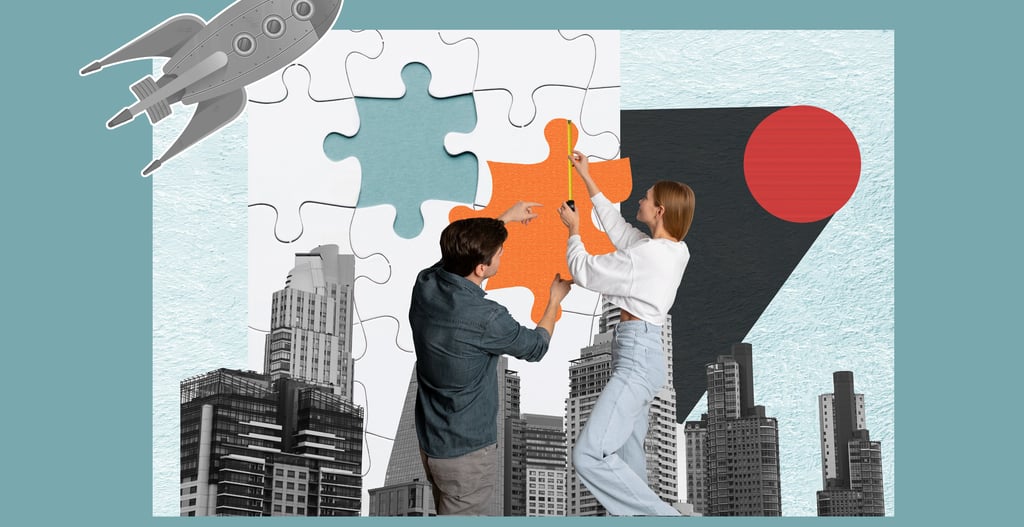
This is the 3rd and the final segment of our series of posts that contribute to a better understanding of the historical forces that shape humanity’s development. The 1st part was primarily focused upon the way the ever-growing economic productivity created the division of labour and the seemingly infinite contemporary specialisations. That post can be found here. The 2nd part discussed the changes in urban geographies and ecosystems that were equally conditioned by these same historical forces. The readers can access it here. This concluding part will shift the focus away from the changes in the material foundations to the social evolution that inevitably follows the former. Equally as in the cases of individual professional specialisation or the global division of labour, the former generations could not have envisaged our contemporary social truths and norms. In other words, our much more advanced economic basis has created our very different social consciousness.
Throughout The Progressive Optimist project the historical differences in the contents of the social mind constitute a recurring theme. We have already noted in earlier commentaries the generations that, for instance, would not have been capable of imagining women travelling solo - or even in a group of females - on vacation on a mass scale. And especially if they were married women. We have also seen that there were times when the idea of a woman becoming a minister of war was regarded as outlandish. So, continuing this thread further, would medieval society have been capable of imagining our contemporary regular elections whereby the political leaders of countries would be chosen on the basis of universal suffrage? Or, to use another example, could they have envisaged the head of state - usually a president in our modern times - being legally impeached for a variety of possible reasons? Something that we take for granted today had been during previous historical eras beyond all reason. Hence, there existed generations of Europeans to whom a vision of a world where the pope has no political power was inaccessible.
On the other hand, would we today be capable of stepping into the mindset of our predecessors? Would it be possible for us to see and interpret the world through the same ideological lenses as those of the previous epochs? Could we force ourselves to treat as normal, for instance, the idea of a hereditary king or a ruler that would actually have the power to determine our political life? Or the idea of some noble cast of people that would be above the law as well as above the rest of the population, as if ordained by some higher powers? Well, arguably no, because those former generations had been born into very different economic structures, which had entailed very different social relations. Hence, we would find it impossible to force ourselves into genuinely accepting the once-admissible idea that the parents should determine the spouses for their offspring.
Interestingly, the same applies in the case of our relation to the future social developments. Whatever we might feel regarding the inability of the pre-Christian pagans to reduce their gods to a single one, or regarding the inability of the feudal emperors to imagine the modern nation-states, the vast majority of our contemporaries would still equally struggle to imagine a post-capitalist society. Namely, a world without markets, without money, without wages, as well as without banks. The famous quote that “it is easier to imagine the end of the world than to imagine the end of capitalism” illustrates this perfectly. But those who are revolted by the proposition of a communist future are merely experiencing the same sensation that would also have been aroused within any random medieval city walls by the idea of standard global units of measurement, such as a meter or a kilogram. And yet, here we are.
It must not be overlooked here that the medieval societies would have also found it easier to imagine the doomsday than the end of feudalism. For that is how our social consciousness operates. And yet, already today we have examples of staff-less petrol stations and grocery stores. Self-service restaurants where people prepare their own meals for themselves, or staff-less hotels where you do all your servicing are also totally feasible. For the sceptics regarding human behaviour and our capability of adopting a communist mentality, it is worth reminding that nobody had educated the feudal individual into a capitalist mindset. The latter emerged organically out of the novel social relations. And that is also exactly how the communist mindset will emerge. One only needs to look at the differences in attitudes towards sorting waste and recycling - both in terms of different generations as well as different nations - to experience the manner in which such changes in social mentality take place in the real world.
Having said all this, it will be, of course, up to the future generations to decide whether such occupations as waiters, bartenders, room cleaners, or retail store assistants - to name just a few - are worth salvaging. Nevertheless, it appears more than likely that once humanity manages to step out of its market based economic system, all marketing-related positions will be regarded as much of a waste of human life as the ancient human sacrifice. In any case, whereas our economic progress has created such a diversity in economic activities that the medieval peasant or the Roman slave could have never imagined, it has, on the other hand, naturalised the idea of a career. In other words, we have created a world where one is essentially expected to choose a profession as a single economic activity for his or her entire lifetime. And while this ever greater economic specialisation has increased the value that the society attributes to the life of an individual to a level beyond comparison to the bygone ages, it has adjacently made it very hard to imagine a much more diverse economic life led by this single person. Why can’t we constantly rotate between, let's say, three different occupations? And why not change these every 10 years, for example?
To be sure, our contemporary technological demands no longer allow us to have all-round self-sufficient individuals. It might prove to not be feasible for the same person to become a dentist, an electrician, an architect, and a pilot all at the same time. Nevertheless, having two different specialisations per person is reasonable, and would be beneficial both for the individual himself as well as for the society at large. Moreover, there still exist today economic tasks that could be done by absolutely everybody. So why condemn someone to spending his or her entire life as a cleaner or as a warehouse worker, while some other person is delegated solely to the tasks of a mechanical engineer or an IT worker? Why not share and rotate those tasks, whereby one works on high-speed trains one week and collects rubbish the other, while his counterpart does the opposite? Everybody is capable of having at least one qualified occupation. And a professional will not lose his skills by working less and by mixing up his activities. The benefits of this both on an individual level as well as regarding the more qualified society are obvious.
As we see, there are extremely significant artificial social limits that could be lifted by stepping beyond the capitalist relations of production. The fact that our contemporary society might not yet be ready to conceive such possibilities only demonstrates the limits of its social consciousness. To think otherwise simply amounts to intellectual arrogance. For example, the private companies and corporations only need workers for their specific tasks. They see no extra benefit in an over-qualified workforce, and they could not care less about the personal development of the people they employ. And as many could attest, obtaining a new qualification under capitalism can often require a lot of additional personal time as well as significant finances - something that is as often in limited supply. A communist society, on the other hand, would not be constrained by the private interests of separate economic enterprises. Obtaining a specific number of qualified people within this or that economic sector could simply become a general social policy.
Furthermore, as a corollary to the communist economic base, we might introduce here the proposition of a direct democracy replacing the current representational model of governance. Again, this idea does not stem out of nowhere. Rather, the fact that greater citizen participation in politics is an ever-growing trend within the developed parts of the globe means that the economic basis is gradually progressing in that direction. Everyone who is still dismissive of such a political model on the basis of its supposed impossibility might as yet have the luxury and the liberty to be so. However, how would the individuals from the feudal period have reacted to the proposition of creating our contemporary national parliaments, elected by all adult citizens of our modern nations? One could have laughed at and ridiculed such a political model when the economic stage of productivity had at the time only created the limited city-states within a feudal land-owning economy. However, after the economic progress had instigated the transition to the modern nation states, it is the old feudal political model that has become incomprehensible.
To sum up, Christopher Columbus could not have imagined how controversial his achievements would become within the anti-colonial social consciousness of the 21st century. Thomas Jefferson would likewise have struggled to conceive how hypocritical his Declaration of Independence would appear through the prism of our anti-slavery minds. The members of the Council of Constance in the early 15th century would arguably have laughed off any suggestion that the leader of the Catholic Church would one day officially declare regret and apology over their treatment of Jan Hus. And finally, Ludwig II of Bavaria will serve as our last example. This 19th century figure was very nostalgic for the culture and the kingship of the Middle Ages, when the kings were still so powerful politically. However, even he would have been prevented by the prevailing social relations from recreating within his brain the genuine medieval social consciousness. More importantly, as yet poor Ludwig II probably could not have imagined a world where the absolute powers of the kings would no longer be the Lost Grail for the conservatives. And neither could he have contemplated a world where this “lost paradise” for the latter would signify the times without same-sex marriages or gender equality. All of these cases provide a sufficient illustration of how we ourselves are constrained by our social circumstances in our ability to conceive the forthcoming ages.
Sources:
https://inthesetimes.com/article/capitalist-realism-mark-fisher-imagination-big-idea
https://www.bbc.com/news/blogs-trending-34507426
https://www.catholicculture.org/news/features/index.cfm?recnum=11824#:~:text=%22On%20the%20eve%20of%20the%20great%20Jubilee%2C,of%20the%20Bohemian%20people%2C%22%20the%20Pope%20said
https://hub.edubirdie.com/examples/hypocrisy-of-thomas-jefferson-and-the-hypothetical-promises-of-the-declaration-of-independence/
https://www.neuschwanstein.de/englisch/ludwig/biography.htm
https://www.radiustours.com/blog/neuschwanstein-castle-king-ludwig/
The Progressive Optimist
Educational project dedicated to the understanding of historical progressive social change
© 2025. All rights reserved.