
On the historical limitations of our social consciousness: Part 2. Urbanisation and the global market
Growing economic productivity and the historical changes in urban geography.
3/4/20266 min read
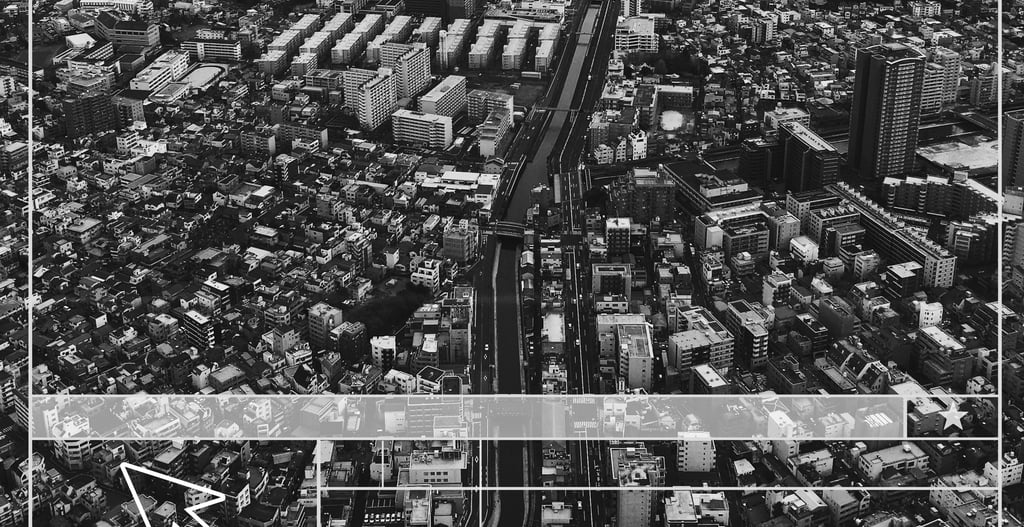

This commentary is a continuation of the 3-part series of texts that discusses the material historical progress, and the inability of the human mind to go much beyond the social reality that would be established at a particular historical moment. In the first part our main focus was upon the manner in which the growth of economic productivity would bring about over time an ever greater division of labour and specialisation. In this part we shall build our exposition further upon this material basis. Here we shall discuss the historical changes that have taken place due to the progress in economic productivity in relation to urban geography. In other words, our modern world has produced very different cities compared to the previous epochs, as well as very different relations between the urban areas and the rest of the ecosystem.
We have already dedicated two commentaries to the issue of 19th-century urbanisation in the so-called developed world. Over there the aim was to exhibit the irrational social anxieties of the conservative people concerning the new social relations that the cities would create. See, for example, Part 1 or Part 2. By contrast, our purpose here is to demonstrate how the historical progress in economic productivity made the rise of the cities - as well as the death of the countryside - inevitable.
To begin with, it should be self-evident that given only a minor proportion of the population that is currently necessary to have employed in agriculture - at least in the developed parts of the globe - in order to feed us all, there is no reason for the remaining members of the society to live on farms or in small villages. But, one might inquire, why was it necessary to move from the feudal towns to the contemporary metropolises? Well, the fact is that our current stage of economic productivity demands factories or other types of economic units that can employ 500, 1000, 2000, or even more workers under one roof in order to produce one single use value, be it some material component or, for instance, a logistics service. To make a comparison with the feudal towns, it could be the case that these particular use-values were not even available during those ages. And even if these were already produced centuries ago, the medieval handicraft producer would have no chance of competing on the same market with the production units of our modern days.
So let’s say that we have a production plant that employs 2000 workers. Can we then assume the possibility of having them dispersed into villages of up to 50 factory workers per location, for example? We must remember here that as a result of the historical tendencies which we have already discussed, now we not only have a massive variety of use-values that make up an acceptable level of subsistence, but also each person is essentially only performing one economic activity. So when we put 50 employees from our factory in one small urbanisation, all of them still need food, clothing, to go out for dinner, dental treatment, furniture, electronics, car servicing, and so on. But as they are only qualified for the specific tasks that they are performing in their workplace, none of them can additionally produce food, work in a clothing warehouse, cook and serve at a restaurant, diagnose and treat illnesses, assemble large-screen TVs, etc. Hence, unless we disregard the inconvenience of travelling longer distances to simply service your car, to treat your toothache, to buy a new laptop, or to get a haircut, our villages of 50 factory workers must grow to incorporate dentists, grocery store operators, shoe sellers, barbers, chefs and bartenders. And all of this on the condition that it is profitable to service such a small market. Greater concentration of inhabitants simply provides better accessibility to the material requirements of modern life. Moreover, it is also the case that in the real world the company which owns this production plant will be wary about a sufficient number of qualified people for its operations, which is equally more probable within greater urban concentrations.
Obviously, this social reality has not always existed. And the feudal urban residents not only could have never imagined cities composed of 5, 10, or 20 million inhabitants. They also would not have been capable of conceiving such economic interdependence with other cities and the global market itself that their towns would eventually be subjected to. In the case of some smaller towns today, their former residents could not have envisioned the fact that the economic survival of their urban settlements would one day be dependent upon one or two economic facilities, such as a factory, a warehouse, or a chemical plant. It is these that today bring the vital income and purchasing power that are later on distributed within the rest of the town's economy and thereby maintain the activities still operating there. And this is related to yet another feature of today’s economic relations that our predecessors from the middle ages could not have foreseen. Why is it, after all, that today somebody has to bring income from outside of the city for its survival? Simply due to our contemporary levels of division of labour, which dictate that every urban ecosystem is forced to buy huge varieties of use-values from outside.
This does not mean that the medieval towns were fully self-sufficient - there was, of course, the question of food from the countryside, as well as of raw materials. Likewise, in terms of artisan production, we need not assume that each urban ecosystem had absolutely every branch of production within its limits. But the levels of interdependence between the feudal epoch and today are beyond comparison. There are very many cities today that do not produce tyres for automobiles, memory chips for smartphones, automation robots for manufacturing plants, or paper for books - just to name a few examples. And yet, essentially every modern city today has cars, smartphones, books, and many other things produced by automation robots outside of its ecosystem. Equally, there can be cities that are very reliant upon one or few economic activities in order to be able to access all of these use-values produced globally that we today take for granted. For example, Velenje in Slovenia, or İnegöl in Turkey.
But equally as in the case of our abstract example in the previous post, namely regarding the four individuals that went from self-sufficient agricultural production to a full division of labour, this growth in interdependence also leads to greater vulnerabilities for the entire urban populations. There are plenty of stories about the economic deaths of towns due to closures or bankruptcies of their sole plants of production. For in such cases it is not feasible for all the cashiers, barbers, teachers, dentists, or bartenders of the town to suddenly start producing various food products, clothes, or furniture themselves. In order to be able to purchase all the stuff that is made outside of their town they have to provide the rest of the world with something in return. And this balance is disrupted when such closures of essential production units occur. To be sure, some towns that could have existed during earlier periods might even never get such investments at all throughout the modern period. In that case they can simply fade away and die out, as is plentifully exemplified by the “pueblos abandonados” in Spain. Some more fortunate locations, such as Hallstatt in Austria or the Santorini island in Greece, for instance, have captured the streams of travellers alongside the expansion of tourism. In these cases it is the visitors who bring the income into the local ecosystem, rather than some large factory or a coal mine.
To sum up, could the medieval handicraft artisans have foreseen that their dwellings and work premises would one day be converted into museums, restaurants, or souvenir shops? Again, it is the growing productivity which has transferred the production units - in the form of large and modern factories, chemical plants, or simply logistics distribution warehouses - into the outskirts of our modern cities. The old town buildings today are both too small for our industrial production, as well as located very inconveniently to bring in the necessary inputs and to ship the huge quantities of output with large modern day trucks. Equally, neither the medieval peasants, nor the feudal artisans could have envisioned our modern world where a wage-labourer in the most remote of towns would be so dependent upon and interrelated with the rest of the workers on a global scale. At the same time, those experiencing the early capitalism of the 19th century would not have been capable of visualising the global corporations of our days, the contemporary fragmentation of the manufacturing processes, as well as the global chains of production.
Sources:
https://www.velenje.si/en/about-velenje-en/a-city-with-a-heart/
https://mobiliyum.com/en/hakkimizda
https://www.nytimes.com/2025/04/04/world/europe/greece-santorini-earthquakes-tourism.html
https://mountain-tours.at/en/hallstatt-facts-and-figures-at-a-glance/
https://www.idealista.com/news/etiquetas/pueblos-abandonados-espana
The Progressive Optimist
Educational project dedicated to the understanding of historical progressive social change
© 2025. All rights reserved.